Affichage des articles dont le libellé est Credit. Afficher tous les articles

dimanche 9 mars 2014

Mexico to Texas on convicted cop killer: Don't execute our citizen


http://www.writerscafe.org/uploads/stories/77fb642d660fbc545a19525a4322fa05.jpg

Mexico's government is trying to block the execution of a convicted cop killer in Texas this week, arguing that it would violate international law.
The case of Mexican citizen Edgar Tamayo Arias is the latest battle in a dispute over the rights of the foreign-born on American death rows. And U.S. Secretary of State John Kerry has said it could put Americans abroad at risk.


Tamayo, 46, was convicted in the 1994 murder of a Houston police officer, whom he shot three times in the back of the head, according to the Texas Department of Criminal Justice.
view


Mexico's Foreign Ministry said Sunday that going ahead with Arias' execution by lethal injection, scheduled for Wednesday, would violate international law because Tamayo wasn't advised of his right to receive consular assistance.

This isn't the first time Mexico has stepped in to try to stop the execution of one of its citizens.

Mexican officials made similar arguments -- unsuccessfully -- before executions in 2008 and 2011.

"The Mexican government is opposed to the death penalty and has decided to use the necessary resources to protect its citizens who are in danger of receiving this sentence," the ministry said in a statement.

Kerry has also weighed in on Tamayo's case, arguing that setting an execution date is "extremely detrimental to the interests of the United States."

"I want to be clear: I have no reason to doubt the facts of Mr. Tamayo's conviction, and as a former prosecutor, I have no sympathy for anyone who would murder a police officer," Kerry wrote. "This is a process issue I am raising because it could impact the way American citizens are treated in other countries."

In a response to Kerry, Texas Deputy Attorney General Don Clemmer said he'd meet with representatives from the Justice Department and the State Department over the matter.

The International Court of Justice ruled in 2004 that the United States had violated the Vienna Convention on Consular Relations, the treaty that lays out rights of people detained in other nations, in the cases of dozens of Mexican nationals. The judges ordered the United States to provide "review and reconsideration" of the sentences and convictions of those Mexican prisoners as a result.

Mexico's Foreign Ministry argues that hasn't happened in Tamayo's case.

It's a case Tamayo's lawyer had made as well in attempts to stay his execution.

"Mr. Tamayo was never informed of his treaty rights at the time of his arrest, and no court has agreed to review that treaty violation and the consequences that it had for his conviction and sentence," attorney Sandra Babcock told CNN affiliate KTRK.

Prosecutors have disputed that argument.

"Since 1994, this case has gone to all the courts that it can possibly go to -- the state courts, the federal courts," Roe Wilson, assistant district attorney in Harris County, Texas, told KTRK. "It has been reviewed."

Revealed: how US and UK spy agencies defeat internet privacy and security

US and British intelligence agencies have successfully cracked much of the online encryption relied upon by hundreds of millions of people to protect the privacy of their personal data, online transactions and emails, according to top-secret documents revealed by former contractor Edward Snowden.

view

The files show that the National Security Agency and its UK counterpart GCHQ have broadly compromised the guarantees thatinternet companies have given consumers to reassure them that their communications, online banking and medical records would be indecipherable to criminals or governments.


The agencies, the documents reveal, have adopted a battery of methods in their systematic and ongoing assault on what they see as one of the biggest threats to their ability to access huge swathes of internet traffic – "the use of ubiquitous encryption across the internet".

Those methods include covert measures to ensure NSA control over setting of international encryption standards, the use of supercomputers to break encryption with "brute force", and – the most closely guarded secret of all – collaboration with technology companies and internet service providers themselves.

Through these covert partnerships, the agencies have inserted secret vulnerabilities – known as backdoors or trapdoors – into commercial encryption software.

The files, from both the NSA and GCHQ, were obtained by the Guardian, and the details are being published today in partnership with the New York Times and ProPublica. They reveal:

• A 10-year NSA program against encryption technologies made a breakthrough in 2010 which made "vast amounts" of data collected through internet cable taps newly "exploitable".

• The NSA spends $250m a year on a program which, among other goals, works with technology companies to "covertly influence" their product designs.

• The secrecy of their capabilities against encryption is closely guarded, with analysts warned: "Do not ask about or speculate on sources or methods."

• The NSA describes strong decryption programs as the "price of admission for the US to maintain unrestricted access to and use of cyberspace".

• A GCHQ team has been working to develop ways into encrypted traffic on the "big four" service providers, named as Hotmail, Google, Yahoo and Facebook.

The agencies insist that the ability to defeat encryption is vital to their core missions of counter-terrorism and foreign intelligence gathering.

But security experts accused them of attacking the internet itself and the privacy of all users. "Cryptography forms the basis for trust online," said Bruce Schneier, an encryption specialist and fellow at Harvard's Berkman Center for Internet and Society. "By deliberately undermining online security in a short-sighted effort to eavesdrop, the NSA is undermining the very fabric of the internet." Classified briefings between the agencies celebrate their success at "defeating network security and privacy".

"For the past decade, NSA has lead [sic] an aggressive, multi-pronged effort to break widely used internet encryption technologies," stated a 2010 GCHQ document. "Vast amounts of encrypted internet data which have up till now been discarded are now exploitable."

An internal agency memo noted that among British analysts shown a presentation on the NSA's progress: "Those not already briefed were gobsmacked!"

The breakthrough, which was not described in detail in the documents, meant the intelligence agencies were able to monitor "large amounts" of data flowing through the world's fibre-optic cables and break its encryption, despite assurances from internet company executives that this data was beyond the reach of government.

The key component of the NSA's battle against encryption, its collaboration with technology companies, is detailed in the US intelligence community's top-secret 2013 budget request under the heading "Sigint [signals intelligence] enabling".

Funding for the program – $254.9m for this year – dwarfs that of thePrism program, which operates at a cost of $20m a year, according to previous NSA documents. Since 2011, the total spending on Sigintenabling has topped $800m. The program "actively engages US and foreign IT industries to covertly influence and/or overtly leverage their commercial products' designs", the document states. None of the companies involved in such partnerships are named; these details are guarded by still higher levels of classification.

Among other things, the program is designed to "insert vulnerabilities into commercial encryption systems". These would be known to the NSA, but to no one else, including ordinary customers, who are tellingly referred to in the document as "adversaries".

"These design changes make the systems in question exploitable through Sigint collection … with foreknowledge of the modification. To the consumer and other adversaries, however, the systems' security remains intact."

The document sets out in clear terms the program's broad aims, including making commercial encryption software "more tractable" to NSAattacks by "shaping" the worldwide marketplace and continuing efforts to break into the encryption used by the next generation of 4G phones.

Among the specific accomplishments for 2013, the NSA expects the program to obtain access to "data flowing through a hub for a major communications provider" and to a "major internet peer-to-peer voice and text communications system".
Technology companies maintain that they work with the intelligence agencies only when legally compelled to do so. The Guardian has previously reported that Microsoft co-operated with the NSA to circumvent encryption on the Outlook.com email and chat services. The company insisted that it was obliged to comply with "existing or future lawful demands" when designing its products.

The documents show that the agency has already achieved another of the goals laid out in the budget request: to influence the international standards upon which encryption systems rely.

Independent security experts have long suspected that the NSA has been introducing weaknesses into security standards, a fact confirmed for the first time by another secret document. It shows the agency worked covertly to get its own version of a draft security standard issued by the US National Institute of Standards and Technology approved for worldwide use in 2006.
"Eventually, NSA became the sole editor," the document states.

The NSA's codeword for its decryption program, Bullrun, is taken from a major battle of the American civil war. Its British counterpart, Edgehill, is named after the first major engagement of the English civil war, more than 200 years earlier.

A classification guide for NSA employees and contractors on Bullrunoutlines in broad terms its goals.

"Project Bullrun deals with NSA's abilities to defeat the encryption used in specific network communication technologies. Bullrun involves multiple sources, all of which are extremely sensitive." The document reveals that the agency has capabilities against widely used online protocols, such as HTTPS, voice-over-IP and Secure Sockets Layer (SSL), used to protect online shopping and banking.

The document also shows that the NSA's Commercial Solutions Center, ostensibly the body through which technology companies can have their security products assessed and presented to prospective government buyers, has another, more clandestine role.
It is used by the NSA to "to leverage sensitive, co-operative relationships with specific industry partners" to insert vulnerabilities into security products. Operatives were warned that this information must be kept top secret "at a minimum".

A more general NSA classification guide reveals more detail on the agency's deep partnerships with industry, and its ability to modify products. It cautions analysts that two facts must remain top secret: that NSA makes modifications to commercial encryption software and devices "to make them exploitable", and that NSA "obtains cryptographic details of commercial cryptographic information security systems through industry relationships".

The agencies have not yet cracked all encryption technologies, however, the documents suggest. Snowden appeared to confirm this during a live Q&A with Guardian readers in June. "Encryption works. Properly implemented strong crypto systems are one of the few things that you can rely on," he said before warning that NSA can frequently find ways around it as a result of weak security on the computers at either end of the communication.
The documents are scattered with warnings over the importance of maintaining absolute secrecy around decryption capabilities.

Strict guidelines were laid down at the GCHQ complex in Cheltenham, Gloucestershire, on how to discuss projects relating to decryption. Analysts were instructed: "Do not ask about or speculate on sources or methods underpinning Bullrun." This informaton was so closely guarded, according to one document, that even those with access to aspects of the program were warned: "There will be no 'need to know'."

The agencies were supposed to be "selective in which contractors are given exposure to this information", but it was ultimately seen by Snowden, one of 850,000 people in the US with top-secret clearance.A 2009 GCHQ document spells out the significant potential consequences of any leaks, including "damage to industry relationships".

"Loss of confidence in our ability to adhere to confidentiality agreements would lead to loss of access to proprietary information that can save time when developing new capability," intelligence workers were told. Somewhat less important to GCHQ was the public's trust which was marked as a moderate risk, the document stated.
"Some exploitable products are used by the general public; some exploitable weaknesses are well known eg possibility of recovering poorly chosen passwords," it said. "Knowledge that GCHQ exploits these products and the scale of our capability would raise public awareness generating unwelcome publicity for us and our political masters."

The decryption effort is particularly important to GCHQ. Its strategic advantage from its Tempora program – direct taps on transatlantic fibre-optic cables of major telecommunications corporations – was in danger of eroding as more and more big internet companies encrypted their traffic, responding to customer demands for guaranteed privacy.

Without attention, the 2010 GCHQ document warned, the UK's "Sigintutility will degrade as information flows changes, new applications are developed (and deployed) at pace and widespread encryption becomes more commonplace." Documents show that Edgehill's initial aim was to decode the encrypted traffic certified by three major (unnamed) internet companies and 30 types of Virtual Private Network (VPN) – used by businesses to provide secure remote access to their systems. By 2015, GCHQ hoped to have cracked the codes used by 15 major internet companies, and 300 VPNs.

Another program, codenamed Cheesy Name, was aimed at singling out encryption keys, known as 'certificates', that might be vulnerable to being cracked by GCHQ supercomputers.
Analysts on the Edgehill project were working on ways into the networks of major webmail providers as part of the decryption project. A quarterly update from 2012 notes the project's team "continue to work on understanding" the big four communication providers, named in the document as Hotmail, Google, Yahoo and Facebook, adding "work has predominantly been focused this quarter on Google due to new access opportunities being developed".

To help secure an insider advantage, GCHQ also established a HumintOperations Team (HOT). Humint, short for "human intelligence" refers to information gleaned directly from sources or undercover agents.

This GCHQ team was, according to an internal document, "responsible for identifying, recruiting and running covert agents in the global telecommunications industry."

"This enables GCHQ to tackle some of its most challenging targets," the report said. The efforts made by the NSA and GCHQ against encryption technologies may have negative consequences for all internet users, experts warn.

"Backdoors are fundamentally in conflict with good security," said Christopher Soghoian, principal technologist and senior policy analyst at the American Civil Liberties Union. "Backdoors expose all users of a backdoored system, not just intelligence agency targets, to heightened risk of data compromise." This is because the insertion of backdoors in a software product, particularly those that can be used to obtain unencrypted user communications or data, significantly increases the difficulty of designing a secure product."

This was a view echoed in a recent paper by Stephanie Pell, a former prosecutor at the US Department of Justice and non-resident fellow at the Center for Internet and Security at Stanford Law School.

"[An] encrypted communications system with a lawful interception back door is far more likely to result in the catastrophic loss of communications confidentiality than a system that never has access to the unencrypted communications of its users," she states.

Intelligence officials asked the Guardian, New York Times and ProPublica not to publish this article, saying that it might prompt foreign targets to switch to new forms of encryption or communications that would be harder to collect or read.

The three organisations removed some specific facts but decided to publish the story because of the value of a public debate about government actions that weaken the most powerful tools for protecting the privacy of internet users in the US and worldwide.

Source : The Guardian

Paula Patton : Our Girl of the Month

Her career’s on fire. Her husband’s everywhere. Actress Paula Patton, it’s clear, has arrived. It started with her turn in the fourth Mission: Impossible as an agent who can kick ass and rock a ball gown. Then her husband, Robin Thicke—get this, they were high school sweethearts—crafted a song we’re still humming, “Blurred Lines.” (The video is stocked with nearly naked models, but in real life all that Thicke wants to talk about is how hot he is for his gorgeous wife.) Now Patton has a new movie, the romantic comedy Baggage Claim, in which the 37-year-old plays a flight attendant still looking for love. (Don’t feel too bad for her, though, because her search involves Taye Diggs and Djimon Hounsou.) We grabbed some time with Patton to discuss Hollywood style, first-kiss magic—and how many of her guy’s sexy lyrics are really true.


GLAMOUR: You’ve been getting so much red-carpet attention. What’s your style philosophy?

PAULA PATTON: I would really love to be a sixties movie star like Sophia Loren or Brigitte Bardot but with a bohemian twist—I have a little bit of hippie in me. I was the kid who would go climb trees in a dress.

GLAMOUR: How do you deal with the pressure to look a certain way?

Paula_Patton_sexy1

PAULA PATTON: I’m an extremist. Either I’m being healthy and organic, or I want a big, juicy In-N-Out burger, you know? And I want it now! It’s certainly not gonna make me a runway model, but it sure makes me happy.

GLAMOUR: You met Robin as a teenager. Do you remember your first kiss?

PAULA PATTON: He sang Jodeci’s “Forever My Lady” to me. He did a full-out R&B onstage performance in his dad’s living room. Then he kissed me. It worked!

GLAMOUR: You guys still seem very passionate. He did say in an interview that he turned you into a bad girl.

PAULA PATTON: He ruined me! Gosh, I hope I’m still a good girl and a bad girl at the same time. And I think that every girl should know the bad girl inside her—and that doesn’t make her bad, you know?

GLAMOUR: So in the “Blurred Lines” video, there’s that balloon message—“Robin Thicke has a big d-ck”…

PAULA PATTON: It’s cool, it’s funny, it’s awesome!

GLAMOUR: Yes, it’s definitely all of those things. But we have to ask: Is it accurate?

PAULA PATTON: Robin’s like, “Listen, if I’m, you know, in the Miami Heat’s locker room, I don’t know where I stand, but.…” But I think that the statement is fairly accurate!

50 CENT CONFRONTS STEVE STOUTE

50 CENT CONFRONTS STEVE STOUTE
Although 50 Cent has made peace with Fat Joe and The Lox, he’s isn’t extending an olive branch to everyone. During half time at yesterday’s Knicks game,
Knicks Warriors
50 confronted former business partner, Steve Stoute. Earlier this week, Stoute assailed Fifty during his interviews with Angie Martinez and The Breakfast Club. Better watch what you say.

samedi 8 mars 2014

Would You Cover Any “Body Part” Insurance Policies Plan ?

We’ve all heard of the stories–this actress insured her legs, that one her breasts.  Can you really insure such things?  And why would you?
The answer to the first question is yes.  You can insure pretty much anything some insurance company somewhere is willing to insure–and for the right price, you’ll find companies quite willing to indulge whatever insurance whim you might have.
And the reason that people do this?  Publicity.  It’s a sheer stunt.  A simple disability insurance plan would cover any “body part” insurance policies that a celebrity want to might have.

How Body-Part Insurance Works

Insuring a body part for a high amount of money makes it seem like the body part has been appraised at such a value.  After all, you can’t insure a house or a car or a necklace for more than they are worth.
david-beckham-Heidi_Klum-jennifer-lopez-kylie-minogue-mariah-carey1
But that’s not how this “body part” insurance works.  The celebrity–or, more often, the endorsement company–picks a number out of thin air:  ”$1 million!  No, $1.6 million!  That seems like a more precise number.”  And then they find an insurance company–usually Lloyd’s of London–that will write a policy for that amount.
You could insure yourself for $5 million, too, if you wanted, through life insurance.  That doesn’t mean that someone came by, looked at your body, and declared, “This man is worth $5 million.”  It just means that you are willing to make a bet that you will die that’s worth $5 million, and an insurance company is willing to take it.
The celebrity or endorsement brand pays their first premium, and then here comes the whole point of the stunt:  The press release.  The celebrity gets covered in the media, and the value of the celebrity’s brand–and whatever body part that the endorsement company is focused on–suddenly seems higher.
All because most people don’t understand insurance.
You might think that a brand that is using that celebrity’s body part to promote its goods has a legitimate business reason for insuring that body part.  But this isn’t really so.  There really is no business reason for L’eggs to have taken out a $1 million insurance policy on Jamie Lee Curtis when they hired her to promote their product.  A simple termination clause would have kept them from having to continue to pay her if she had a terrible accident and one of her legs were mutilated.  But the insurance policy got a great deal more press for L’eggs and their celebrity endorser, both.
The company might pay the premium for a year or two–but really, it’s all about the publicity, so why bother to keep it?
Of course, not every strange thing that people have insured is due to a clever bid for media attention.  Sometimes people insure strange things because they’re crazy.  But as long as they’re crazy and they’ve got the money, they’re likely to find someone to write a policy.

Craziest Celebrity Insurance Policies

So, now that we’ve covered the “why” and “how,” let’s get to the fun part:  The “who” and the “what”!

Legs.

This is the most popular body part to cover.
Fred Astaire, Legs, $150,000
Betty Grable, Legs, $1 million
Mary Hart, Legs, $1 million
Rihanna, Legs, $1 million
Jamie Lee Curtis, Legs, $1 million — endorsement brand
Heidi Klum, Legs, $2.2 million – endorsement brand
Tina Turner, Legs, $3.2 million
Lord of the Dance Michael Flatley, Legs, $40 million
Mariah Carey, Legs, $1 billion – endorsement brand

Breasts.  

Less common but no less of a stunt.
Holly Madison, Breasts, $1 million
Madonna, Breasts, $2 million
Dolly Parton, Breasts, $3.8 million

Voice and Hands.

A favorite of musicians and singers.
Marlene Dietrich, Voice, $1 million
Bruce Springsteen, Voice, $6 million
Rod Stewart, Voice, $15.5 million
Keith Richards, Hands, $1.6 million
Jeff Beck, Fingers, $10 million

Signature Body Parts.

Sometimes just because.
Jimmy Durante, Nose, $50,000
Troy Polamalu, Hair, $1 million – endorsement brand
Tom Jones, Chest Hair, $1 million
Gene Simmons, Tongue, $7 million
America Ferrera, Smile, $10 million – endorsement brand
Cricket player Merv Hughes, Mustache, $370,000 (Australian)

Tools of the Trade.

These are just two of the tasters who have sought to boost their reputations by insuring their senses of taste or smell.
Food critic Egon Ronay, Taste Buds, $ 400,000
Wine expert Angela Mount, Taste Buds, $16 Million

Sports Star’s Bodies.

Usually, the team takes out a comprehensive policy against injury or illness during a given season, but sometimes, sports stars take out policies of their own.
Mark McGwire, Ankle, $120 million
David Beckham, Injury, Illness, and Disfigurement, $195 million
And now for the  crazy….
Shirley MacLaine, Alien Abduction, $25 million.  Really, there’s nothing to say about that!

Rick Ross And Jeezy Fend Off Gun-Toting Assassins In 'War Ready' Video

Rozay and the Snowman have put their differences behind them, and this murderous new clip is further proof.

 Rick Ross and Jeezy appearing on a track together was a pipe dream just a couple of months ago, but now that the former rap foes have buried the hatchet, the pair appear to be all in.
Not only have Rozay and the Snowman linked up for "War Ready," the two also got together to shoot the music video. On Friday (March 7), Ross debuted the Taj-directed video on WorldStarHipHop.com, a site that thoroughly documented the past feud between the rappers.


And the cinematic clip is just as dramatic as the Mike Will Made It-produced track. The cameras open on Ross in a dank warehouse, standing in the dark as a team of masked, machine gun-toting assassins make their way inside of his and Jeezy's compound. Though they were once on opposite sides of the hip-hop fence, in the clip, Jeezy and Ross stand on the same side, as bosses, prepared to defend their respective positions at all costs.
The video's story line is of course an exaggeration of real life, but Ross assures that he and Jeezy are good. Maybe they aren't literally shooting in defense of each other — but they have formed an alliance in the studio.
"Where I'm from, if you ain't shed no blood, if you ain't lose no money behind it, it's really small talk," Rozay said of his old beef with Jeezy on Wednesday during an episode of "RapFix Live." "When me and him chopped it up, we did it like bosses and said, 'Let's set an example for the next set of entrepreneurs. It's bigger than us. Let's do it for the South, let's do it for the game.' "

Rick Ross And Jeezy Have Another Collaboration Coming
Jeezy and Ross emerge unscathed at the close of the video. Not that we would ever expect any other ending: After all, they have more music to record.
"We knocked out two records. One is mine, one is his," Ross revealed to "RapFix Live," alluding to another record on the way after the duo's Mastermind collab.

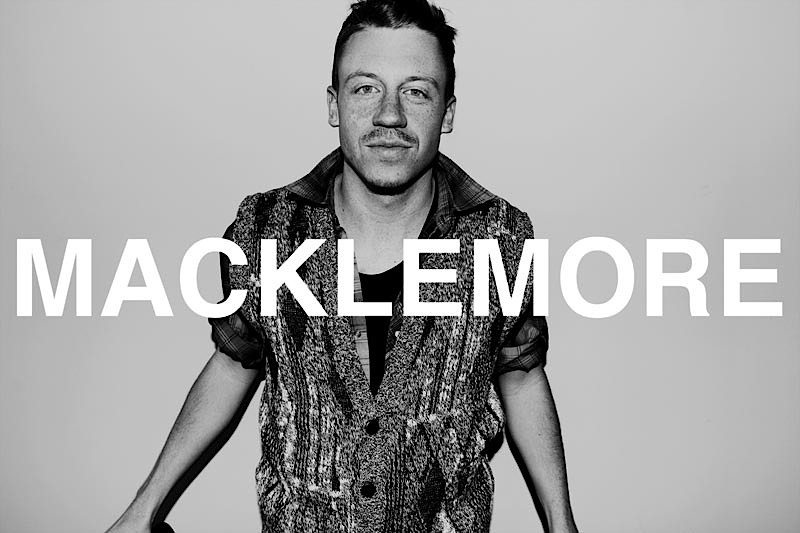
Macklemore's 'Thrift Shop' Tops List Of Hottest Rap Songs Ever


Macklemore and his producer Ryan Lewis are crushing hip-hop metrics, no matter how apologetic the Seattle rapper is about his big wins. After sweeping the rap categories at the Grammy awards this year, the duo can now boast that "Thrift Shop" is the best-performing rap song in the past 25 years.
That statistic comes from Billboard, as the publication celebrates the 25th anniversary of their Hot Rap Songs chart, by ranking the 100 best-performing tracks since they began keeping track in 1989.
Not only did "Thrift Shop" land at #1, but "Can't Hold Us" also made an appearance in the top five, landing at #4. Not too shabby for a debut album.
Coming in at #2 on the list was the 69 Boyz's "Tootsee Roll" and at #3 Missy Elliott feat. Nas, Eve & Q-Tip with "Hot Boyz." Kanye West's "All of the Lights" rounded out the bottom of the list, landing at 100.
The top 10 hottest rap songs, according to Billboard:
1. Macklemore & Ryan Lewis feat. Wanz - "Thrift Shop"
(Hot Rap Songs Peak: 1, Peak Date: 1/19/2013)

Macklemore & Ryan Lewis - "Thrift Shop featuring Ryan Lewis & Wanz"
2. 69 Boyz - "Tootsee Roll"
(Hot Rap Songs Peak: 1, Peak Date: 9/3/1994)
3. Missy Elliott feat. Nas, Eve & Q-Tip - "Hot Boyz"
(Hot Rap Songs Peak: 1, Peak Date: 11/27/1999)

Missy Elliott - "Hot Boyz"
4. Macklemore & Ryan Lewis feat. Ray Dalton - "Can't Hold Us"
(Hot Rap Songs Peak: 1, Peak Date: 5/4/2013)

Macklemore & Ryan Lewis - "Can't Hold Us ft. Ray Dalton"
5. Salt-N-Pepa - "Expression"
(Hot Rap Songs Peak: 1, Peak Date: 1/20/1990)


Salt-N-Pepa - "Expression"
6. Coolio feat. L.V. - "Gangsta's Paradise"
(Hot Rap Songs Peak: 1, Peak Date: 9/2/1995)
7. Craig Mack - "Flava In Ya Ear"
(Hot Rap Songs Peak: 1, Peak Date: 9/10/1994)
8. The Notorious B.I.G. - "Big Poppa/Warning"
(Hot Rap Songs Peak: 1, Peak Date: 1/28/1995)


Notorious B.I.G. - "Big Poppa"
9. Waka Flocka Flame feat. Roscoe Dash & Wale -- "No Hands"
(Hot Rap Songs Peak: 1, Peak Date: 12/11/2010)
10. Digital Underground -- "The Humpty Dance"
(Hot Rap Songs Peak: 1, Peak Date: 3/17/1990)

MisterWives Covered Sam Smith’s ‘Money On My Mind,’ Aaaaand We Can’t Breathe

Listen to MisterWives' cover of Sam Smith's "Money On My Mind."
Take several deep breaths before you listen to MisterWives rendition of “Money On My Mind.”
We’ve been freaking out over MisterWives for a minute around here. The Jackson Five-esque, disco-pop beat on their debut EP, Reflections, had us ready to crown them the next golden children of pop.
So, imagine our delight when we heard the band’s cover of “Money On My Mind,” which was originally performed by Sam Smith, another artist we’ve had a completely healthy, functional, and in no way obsessive relationship with this year — why do you ask?
MisterWives’ cover doesn’t stray too far from the Woodies performer’s original, although they dial back the percussive energy and inject more organic-sounding rhythmic elements. Still, lead singer Mandy Lee more than holds her own against Smith’s broad vocal range — not an easy thing to do.
What really sells MisterWives’ cover for us, however, is the little detour they take near the end of the song, mashing up a few lines of The Notorious B.I.G.’s “Mo Money, Mo Problems.” Pardon us while we hook ourselves up to an oxygen tank…

The Avett Brothers Give Brooklyn A Southern Makeover At NYC Show

"Brooklyn, Brooklyn, take me in. Are you aware the shape I'm in? My hands they shake, my head it spins. Oh Brooklyn, Brooklyn, take me in."
If any lyrics were appropriate for the Avett Brothers' night in Brooklyn's Barclays Center, those would be it. Though, throughout the show, all shaky hands were steadied and Brooklyn seemed to fully embrace the four-piece band from North Carolina.
Scott and Seth, along with bandmates Bob Crawford and Joe Kwon, transformed Jay Z's home base into a full-fledged Southern party, with openers Old Crow Medicine Show kickstarting the raucous bar vibe with their cover of Tom Petty's "American Girl." There were drunk girls in plaid, ridiculously long lines to the ladies' room, beer sloshing and hair flipping (most of it coming from cellist Kwon). Fans set their beers on the stage, as if they forgot all about the arena-sized concert they were at and imagined themselves at a more intimate tavern.

That intimate feel started early, as Scott began the show solo, strumming his banjo at the end of the catwalk, fans reaching to his feet. A fiddle soon joined him, and then bass, drums, more guitar and cello, building up into 2006's "Colorshow."

The signature Avett build-up is what powers their live show, with anticipation adding with every instrument played and verse sung. "Laundry Room," played in the middle of the set, is another example of this. It begins with piano and flows slowly with organ and guitar weaving in and out of the lyrics. The brothers harmonize and start echoing each other, adding up energy. The back-and-forth feeds into a swift banjo solo, which then breaks into an all-out hoedown, fiddle taking the spotlight.

Played live, the song has a hypnotic effect, captivating the audience at first and slowly carrying them through until, at last, they can bounce up and down, link arms and stomp their boots with fervor.
But despite any rowdiness, fans were attracted to the heart within the songs — the same heart that has the brothers shouting their meaningful lyrics into the mic, and then repeating them again as ad-libs into the air. Fans emphasize the lyrics, singing the words carefully and passionately. Humble lyrics like "I wanna fit in to the perfect space/ feel natural and safe in a volatile place./ And I wanna grow old without the pain/ give my body back to the earth and not complain" on "The Perfect Space" make you understand why.
The guys played show staples like "Murder in the City" and "The Ballad of Love and Hate," but also dished out new songs from their latest abum, Magpie and the Dandelion — "Morning Song," "Skin and Bones" and "Vanity." In smaller theaters, "Love/Hate" would've absolutely silenced a crowd, but with thousands of people feeling the camaraderie, the sensitive song turned into a sing-along.

The band, who is playing Hangout Fest in May, pulled out the Old Crow Medicine Show fiddler for a cover of "Thank God I'm A Country Boy," made famous by John Denver. During the Avetts' encore, Old Crow joined in again, this time for "Will the Circle Be Unbroken?" and the Spaniels' "Goodnight, Sweetheart, Goodnight," with Seth handling the low notes.

In the end, the Avett Brothers never had to beg "Brooklyn, take me in." They made the night at Barclays their own, as if they belonged there all along.

4 Topics Ripe For Parody In Lena Dunham's 'SNL' Episode

If there were two words to describe Lena Dunham, they would be "funny" and "tough," The 27-year-old actress-writer-showrunner-make-us-feel-bad-about-our-relative-lack-of-achievements-er will take her first spin hosting "Saturday Night Live" this weekend, and we can't wait to see what comes out of it.
The legendary sketch comedy show recently lost head writer Seth Meyers to the wilds of late night talk shows, so we thought we'd provide the writing staff with a few hot tips for Dunham's episode, just in case they're caught scratching their heads for what to write for the "Girls" star. Come on, y'all. There's so much good stuff there.
As for whether Dunham can take the heat of well-meaning mockery, well, anything you can say about her, she's probably already said about herself before.

Pigeon Gate
We'd bet our stylish little salvaged and repurposed buttons that this one'll come up: Remember when Dunham may or may not have had a bird on her head during the photoshoot for her Vogue cover shoot?
We called our psychic to consult, and we're seeing...a raccoon? A nutria? Bobby Moynihan? Perched atop Dunham's noggin. Take that, Jezebel.
Nudity
We saw it once in the promos she did with Kate McKinnon for this weekend's show, and we can pretty much guarantee we'll see it again. ("It," in this case, is boobs.)
Her Shark-Jumping "Star Wars" Tweet
Remember the time Dunham kind of accidentally confirmed co-star Adam Driver's big "Star Wars" casting news via congratulatory tweet? We do! (Also, it was like five minutes ago, so of course we haven't quite forgotten.) In this social media-ified age, there's so much rich opportunity for shark-jumping. Maybe she could somehow jump an actual sea creature with a smartphone? We're not opposed.
"Girls" Think Pieces
Let's not overthink things, shall we? Oh, wait, that's just about all we do when it comes to "Girls." Sometimes, a cupcake shared with a friend in the tub is just a cupcake shared with a friend in a tub, end of story. This is Big L's chance to tell the world. Again.

Lena Dunham hosts "Saturday Night Live" on NBC March 8 at 11:30 p.m.

LIFE’S CELEBRITIES INSURANCE POLICY

In a Life Insurance policy there is a difference between the insured and the policy holder. Life insurance policies can be taken out on someone else’s life. Sadly there is a clause in Life Insurance policies that states that the person taking out the policy must have an ‘insurable interest’ in the insured. The clause is called the cestui qui vit or CQV and usually means that the person taking the policy out must actually suffer some kind of personal loss in the event of the death of the insured. This generally refers to people such as husbands, wives, parents, children or business partners.

view
This clause means that one cannot just take out speculative policies on someone they predict will die. Incredibly this is how life insurance began its life. In Victorian England people would take out policies on other people’s lives. They would publish news of deaths in the newspaper and speculators would receive a payout. This practice was later banned as it provided a motive for murder. Shame I say. It sounds like a fun gamble and I can think of a few celebrities that would be worth a punt.
Especially after hearing that TVs Ant and Dec have insured each other’s lives for a reported 2million pounds. Probably not the best punt as I imagine they are the cleanest living people on this planet. Perhaps Amy Winehouse or Pete Doherty would be a safer bet. Their reported drug abuse seems to suggest that they are destined to die young and would probably be insurable for far more. So here is my list of celebrities that I would take a punt on presuming the estui qui vit or ‘insurable interest’ clause did not exist.

Cliff Richard

I am convinced Cliff was pickled 30 years ago and is propped up by a team of record industry bigwigs. Technically he is already dead but no-one has allowed a doctor near him to verify it. As soon as they do you could be in for a massive payout because he is worth a lot of money.


Amy Winehouse

I fancy the reports that she is taking inhuman quantities of illegal substances are exaggerated. Nevertheless she is probably worth an outside punt and her youth would probably mean a larger payout.

The Queen

She can’t live forever can she? Although the Queen mum had an incredible run into old age I predict things will be less easy for the Queen; especially with the power hungry Duchess of Cornwall looking over her shoulder. Regicide? You don’t hear that often these days. The value of this policy would be innumerable.

Britney Spears

A long shot but well worth considering. After all it seems she will do anything for a bit of publicity. I would not put death beyond her marketing team. Add to this that she is probably worth billions she could be an excellent investment.

Hugh Hefner

Another one that I think is being propped up by a team of medical professionals. It’s about time that one of those bunny girls finished him off and with a potential payout of millions I wouldn’t be surprised if they did. Well worth a gamble.

CELEBRITIES BODY PART INSURANCE

Although most commonly associated with celebrities, body part insurance can offer crucial financial cover, and protect your livelihood if you rely on a specific part of your body to earn a living. Although uncommon, body part insurance is more popular than you might assume; performers (including musicians, singers and actors) as well as artists, surgeons, athletes and other sports people all commonly require this type of insurance. Body part insurance pays out financial compensation for any accidental damage or disfigurement caused to the insured body part, if the damage results in a loss of work.

view
From the most ‘normal’ types of body part insurance, such as cover for a model’s limbs, to the more bizarre kinds, including insurance for a sommelier’s taste buds, almost any body part can be insured if it can be proved that loss of use of this body part would lead to significant loss of work and income.
Body part insurance is usually relatively expensive; it is often bought by experts in their field, or celebrities: some of whom even use it as a promotional gimmick. However, it is not only celebrities who may need protection in case of disability or loss of use of a vital limb. Models for example, have a career based almost entirely on appearance, and could lose out on significant income if disability prevented them from winning future contracts. As a result, a model might insure several parts of their body, for example their legs and even their smile. Body part insurance is not designed to insure your whole body: it is intended to cover only select body parts. If you wish to insure your whole body it may be more suitable for you to take out a comprehensive life insurance policy instead.
The 10 biggest insurance policies stars have taken out on their body parts

10. David Lee Roth’s $1million (£670K) sperm

The Van Halen frontman would have surprised no-one if he’d spent money protecting his vocal chords.
But he turned heads in his band’s 80s heyday when he took out a $1million policy on his sperm.
Roth splashed out on his little swimmers to cover himself in the event he impregnated a groupie and, as a result, was hit with an expensive paternity suit.
And, if reports are to be believed, he went on to take full advantage of his cunning scheme – without fear of split condoms…

9. Keith Richards’ $1.6million (£1.1m) hands

In fairness, the Rolling Stones guitarist would definitely be out of a job if he lost his hands.
So it was a shrewd move on his part to protect his chord-playing appendages in the event of a hedge-trimming or tree-felling catastrophe.
The insurance package covers both hands and, when asked about the policy, he waved his arms and said: “These are my business.”
After all, he wouldn’t get much Satisfaction playing a guitar with no hands…

8. Heidi Klum’s $2.2million (£1.5m) legs

It makes sense that the German supermodel would insure the two things that enable her to walk up and down catwalks the world over.
Oddly, one of her pins is insured for $200,000 less than the other due to a scar on her knee.
She told The Sun: “They are different values because I have this little scar.
“I had to be examined in London. A guy came and inspected my leg.”

7. Dolly Parton’s $3.8million (£2.5m) boobs

Without doubt, country queen Parton has become as known for her gargantuan lady mountains as she has her singing voice.
Therefore, it made total sense when she took out a policy on her 40DD assets – realising she wouldn’t be who she is without them.
They were initially insured for $300,000 each but inflation (no pun intended) has caused their value to swell (again, no pun intended).
As well as enriching the pockets of her insurers, her bountiful boobs have helped to make Parton minted…

6. Rod Stewart’s $6million (£4m) voice

The ageing rocker wouldn’t be able to wake up Maggie or say anything to her if he lost his voice.
More importantly, his career as a singer would be over.
He was alerted to the merits of insurance after fearing his voice had been irreparably damaged following throat surgery in 2000.
Stewart is now protected to the cool tune of $6million in case his much-loved raspy vocals do a disappearing act.

5. Tom Jones’s $7million (£4.7m) chest hair

Granted, it’s not unusual to be loved by anyone.
But it’s downright bizarre to put a price tag on one’s bodily follicle growth.
That said, Welsh legend Tom thought his success was as much down to the forest spilling out of his open shirt as it was his warbling tones.
So he paid out on a $7million policy to cover losses of earnings if his chest hair spontaneously combusts…

4. Jennifer Lopez’s $27million (£18.1m) buttocks

J-Lo has made a name for herself as a star of both film and music – but she’s also much-admired for her bulging backside.
Fearing she’ll hit rock bottom if her peachy buttocks abandon her through injury or the merciless perils of nature, the singer/actress made financial arrangements to guarantee she wouldn’t be too down in the dumps if her worst nightmare came true.
Losing one’s bum cheeks isn’t a chief concern of many, but J-Lo clearly values her booty highly.
Well, $27million to be precise.
And the actress admitted she’s contemplating taking out an insurance policy on her famous assets.
While most ordinary folk limit their insurance expenditure to their homes, cars, travel and pets, it’s not uncommon for celebrities to splash out on their body parts.
Swathes of stars protect what they perceive to be the money-making features that, should they ever lose them, will put a huge dent in their earnings.
Hence why the likes of Rihanna and Jamie Lee Curtis took out policies worth $1million (£670,000) and $2.8million (£1.9m), respectively, to safeguard their legs.
The craze was kicked off by Hollywood star Betty Grable, who insured her pins in the 1940s for $1million.
Here’s a top ten rundown of the limbs, appendages, hair and bodily fluids that stars have forked out on – in reverse monetary order.

3. Michael Flatley’s $40million (£26.9m) feet

Irish super-hoofer Flatley would have faced a much greater challenge becoming the Lord Of The Dance without feet.
The 54-year-old has made a career out of his speedy trotters and spent big to ensure he’d live comfortably – financially, at least – should his feet either fall off or stop working.
He’s not the kind of fella hapless female dancers would want to boogie with at a party.
One accidental misstep could cost the dancer his day job and push the perpetrator into bankruptcy…

2. David Beckham’s $70million (£47m) legs

Let’s face it, David Beckham wouldn’t have captained England or won countless accolades with no legs.
The Paris Saint-Germain midfielder took out what is thought to be the largest personal insurance policy in sports history in 2006.
It’s claimed Becks will receive the mammoth pay-out in the event of an injury to his legs, feet or toes that would force him into retirement.
The fact he’s a fan of riding motorbikes must send his premium soaring..

1. Mariah Carey’s $1billion (£670m) legs

The singer stumped up for her stumps after she was awarded Gillette’s Legs Of A Goddess prize.
Winning the award apparently awakened the pop diva to the popularity of her pins, and subsequently insured them for a bonkers $1billion.
Adding to the absurdity, Gillette commemorated Carey’s limbs victory by having a statue of her legs made.
Naturally, she sparked widespread bafflement with her financial arrangement – on the basis she could still shatter glass with her vocals without legs.